
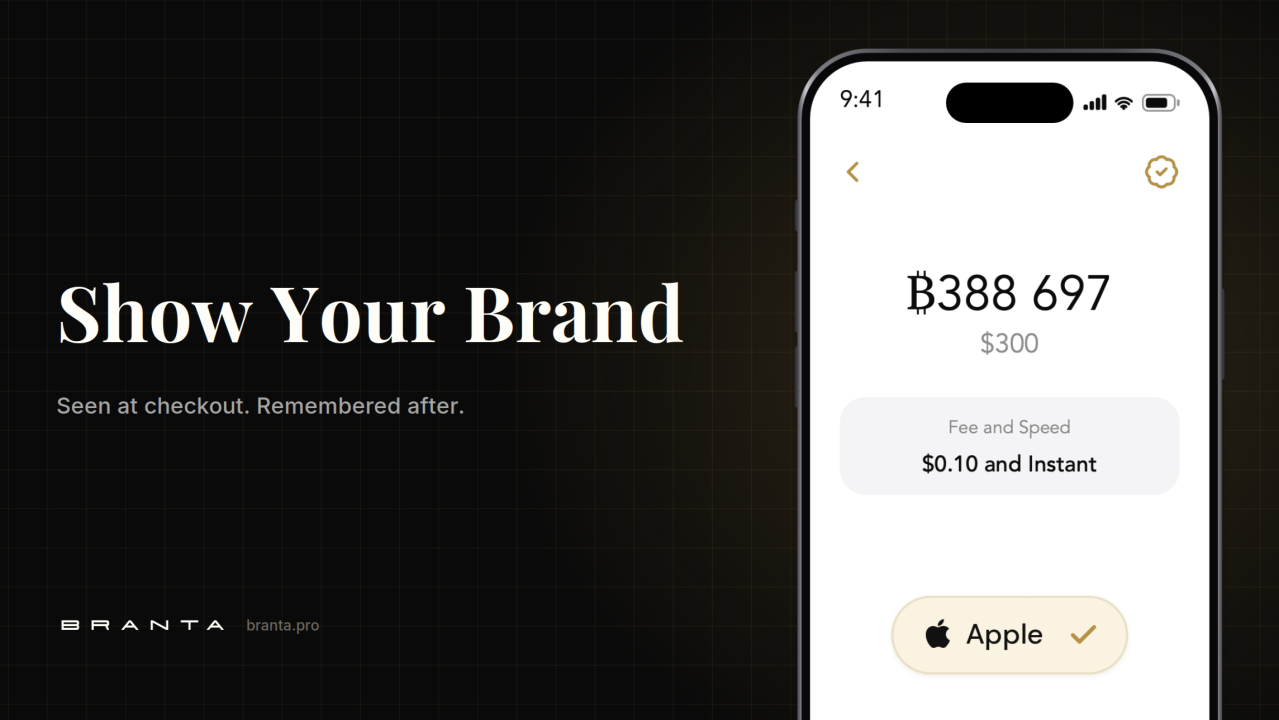
Brand Recognition Is Missing in Crypto Wallets
The future of on-chain payment volume can scale properly by bringing company branding into the wallets that users use. Branta provides this opportunity for brands via one API call in a zero knowledge way for your users.
A crypto payment currently gives a business two moments of brand presence, and both are blank.
The screen a user stares at right before authorizing the payment shows an address. The record sitting in their wallet history afterward shows the same address, permanently.
At both of these screens, the crypto industry standard is zero branding. Yet these wallets are the applications that consumers interact with most. There is massive opportunity for payments to scale in crypto by applying company branding to these platforms.
The current landscape is as if a customer walks into an unmarked storefront, hands cash to an unidentified clerk, and leaves with a receipt printed in a language they cannot read. The transaction works. But the relationship does not compound beyond this one moment.
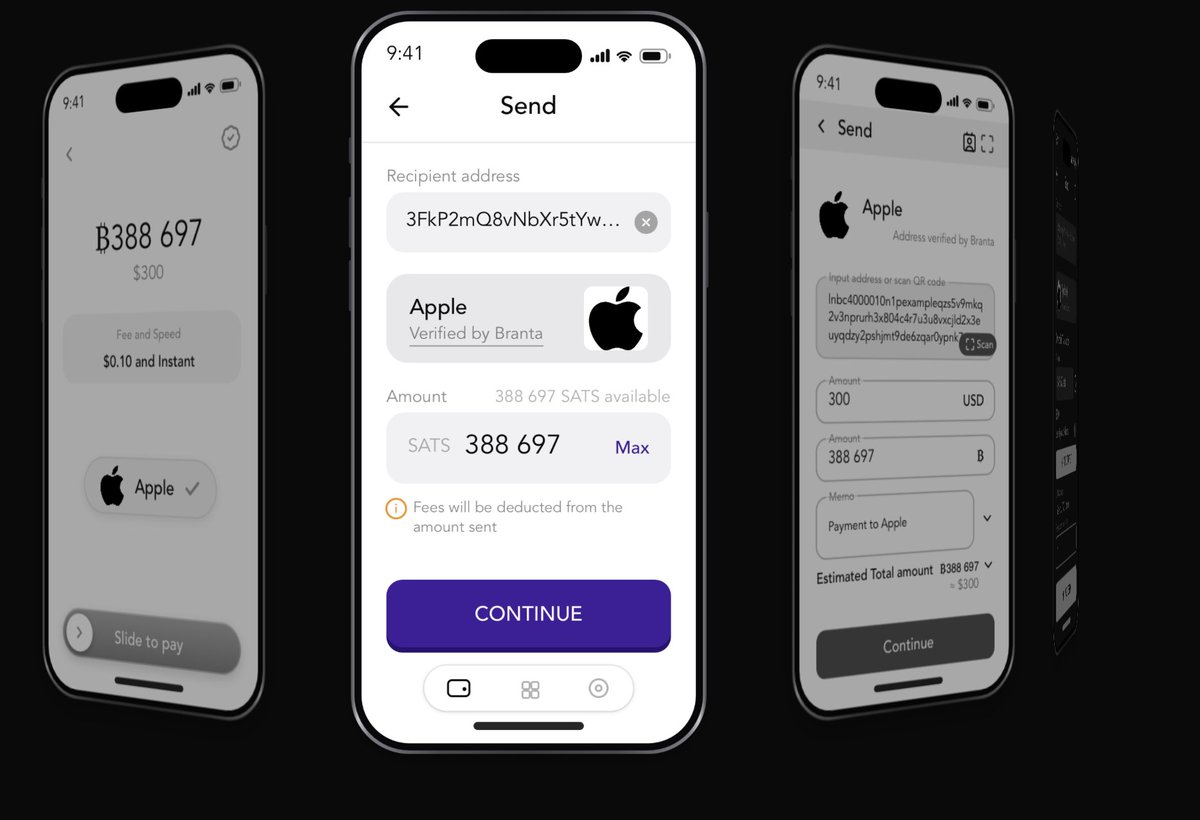
Branta fills both the pre-transaction screen and payment history screen with verified business names and logos. By verifying who the user is paying, Branta increases conversion at the point of sale because trust is increased.
Applying branding to the payment history page of a wallet leads to compounded brand touchpoints and recognition with your customers which in turn promotes a higher returning customer rate.
Blank Space Opportunity for Branding
Card rails have never been good at showcasing branding in your payment history, but they do have some recognizable features. A card statement carries a merchant descriptor, usually mangled, and often a legal entity name people struggle to recognize. This confusion can lead to a degraded customer experience. Mastercard’s research with Datos Insights found that half of consumers questioned a purchase in the previous twelve months, and 24% did so specifically because they did not recognize the details on their statement. Nearly half, 48%, have disputed a charge they later realized was entirely legitimate.
Viewed from a branding perspective, when the post-purchase record fails to identify the business, a meaningful share of customers do not merely forget the brand, they turn against it. Mastercard’s own recommended fix is clear merchant names and logos inside the app and we saw this via their acquisition of Ethoca. Ethoca is a company that pulls company branding into the point of sale. This is a real traditional finance example for the exact solution that Branta is pioneering for on-chain payments.
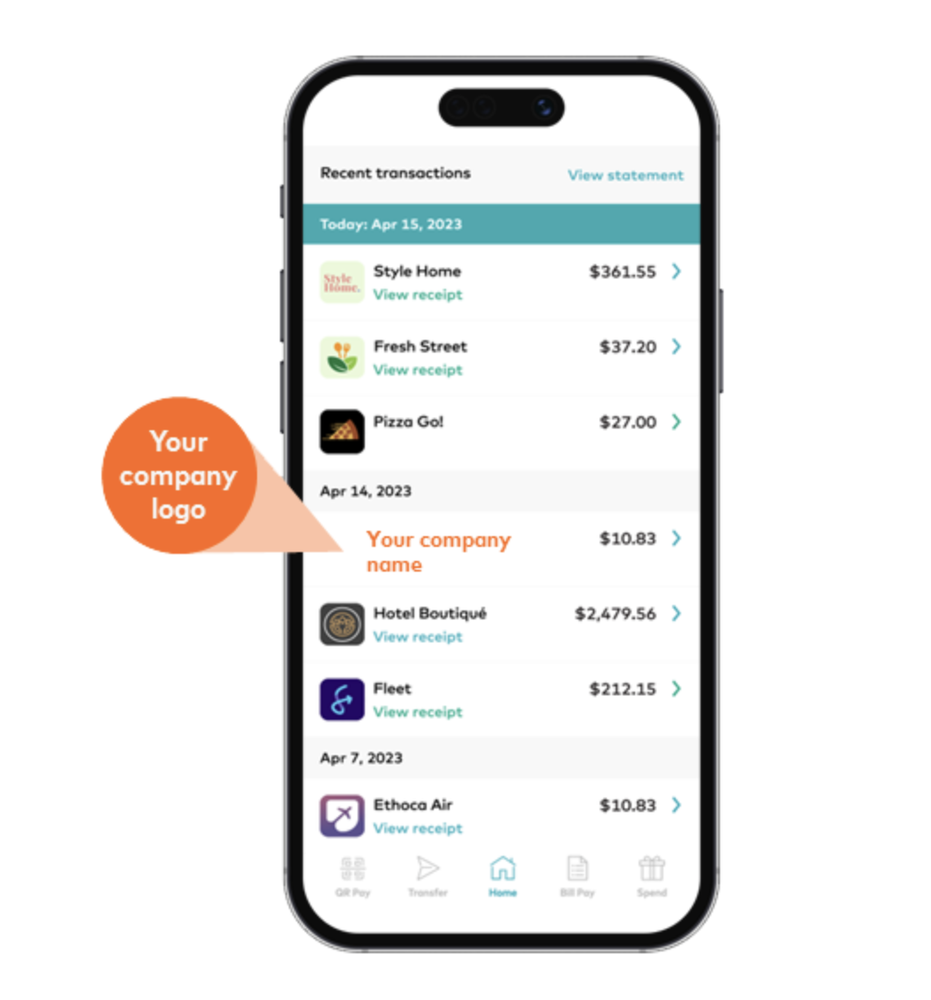
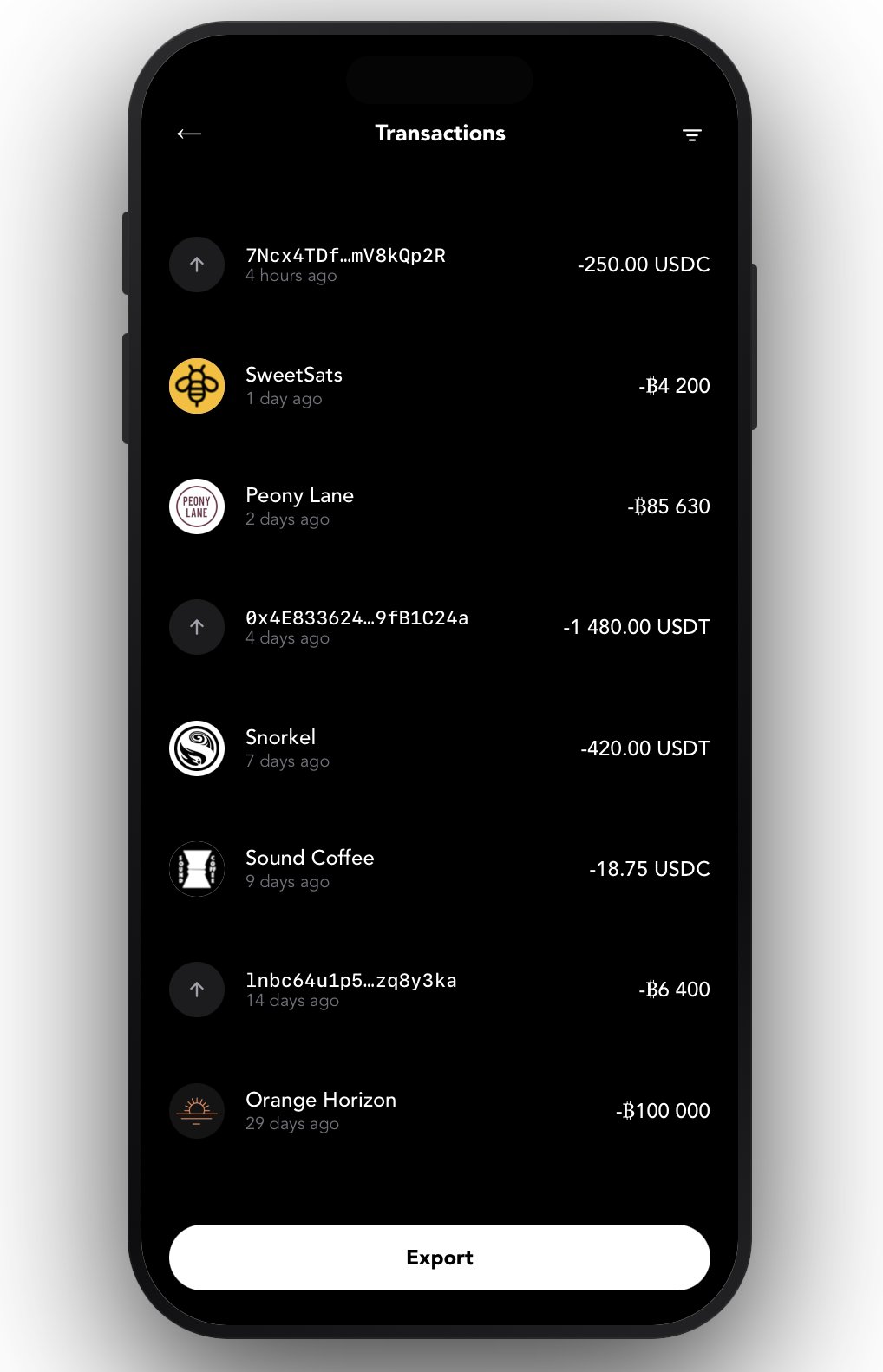
While traditional card rails do have labels for companies, albeit sometimes hard to understand, the current on-chain gap is total. There is no plain text descriptor with a transaction, the standard is looking at a wallet address of numbers and letters that commonly identifies nothing and shows no qualitative information. The result is a business can spend years building a brand, accept on-chain payments, and end up with less permanence in that customer’s record than a gas station has on a credit card bill.
Branding Links to Purchasing
The link between seeing a brand and choosing it again is one of the better established findings in consumer psychology.
It takes fewer exposures than you would think. DelVecchio, Jones and Baugh, in Psychology & Marketing, ran participants through a task where a logo appeared zero, four, or twenty times. Four exposures produced a sense of connection to the brand statistically on par with twenty, and the effect ran entirely through perceived familiarity.
Not four campaigns. Four glances.
Using Branta, your customer instantly gets two brand touchpoints in their native wallet with every sale. One at the point of pre-transaction and then one permanently inside their wallet history.
Recognition via visual exposure is an extremely replicated phenomenon. Montoya and colleagues, in Psychological Bulletin in 2017, pooled 268 effect estimates across 81 articles and confirmed that repeated visual exposure reliably increases familiarity and liking. If you are a brand looking to increase both conversion and return customer rate, why would you not want your branding showcased where crypto customers interact with most?
Brand recognition works even when nobody is paying attention. Ferraro, Bettman and Chartrand, in the Journal of Consumer Research in 2009, showed people photographs of ordinary strangers holding a bottle of Dasani. Those who had seen the logo were more likely to choose Dasani over three competitors afterward, including participants with no conscious memory of having seen it. Incidental exposure, unattended and unremembered, moved actual choice. Adding contact points for customers that persist inside their native applications, such as their payment history page inside of their wallets, is a no brainer for any business looking to develop sustained user touchpoints at every step of the customer journey.
Finally, brand accessibility beats affection. Nedungadi, in the same journal in 1990, demonstrated that making a brand easier to recall increases the odds it gets considered and chosen, without changing how highly anyone rates it. The brand did not become better liked. It became easier to retrieve, and retrieval was enough. The iconic logos you can all immediately recognize, the golden arches of McDonald’s, the swoosh of Nike, the Apple logo, all subliminally and proactively cause potential customers and return customers to have bias toward purchasing, or purchasing again, even if they don’t realize it consciously.
Branta offers businesses the ability to make their branding and business easier to bring to mind when the next purchase decision happens. Research points that this is a decisive variable that brands can focus on to increase customer return rates.
Fill the Blank Space With Branta
Businesses using Branta allow their branding to be showcased in two new surfaces that are presently left empty. As crypto payment volume scales, the brand recognition impact of putting your branding at the pre-send screen and inside the wallet history can be monumental for downstream sales. The impact of your brand in each accomplish different things.
The pre-send screen builds customer trust. Nobody skims the screen where they are about to irreversibly move money. Every customer looks, and looks carefully, because finality demands it. There is no other brand impression in commerce that reliably commands this much focus. Advertising fights for attention; this surface already has it. By adding your brand, your customers know with 100% certainty that they are paying the right address. There is no doubt at the point of payment, there is trust in exactly where their funds are moving.
The wallet history screen is a permanent advertising page on your customer’s device. The wallet history screen is the surface with no exact fiat equivalent, and the more interesting one. A card statement is transient and mostly ignored. A wallet record is durable, self-owned, and re-read. Every scroll past a branded entry is another additional exposure and reminder of your brand. A logo in a customer’s own transaction history is a cue attached to a memory they already have: I bought from this business, and I enjoyed what I purchased. A permanent, branded, self-owned record is about as accessible as a purchase memory can be made.
Combine these two surface layers with the fact that customers who chose to pay with Bitcoin generated nearly three times the lifetime value of everyone else at the same stores, spent about 38% more on their first purchase, and were roughly 50% more likely to come back for a second. They also opted into brand communication at around an 84% rate, despite being a privacy-conscious group.
Add on the fact that scale is no longer speculative. Stablecoins moved about $33 trillion in 2025, more than Visa and Mastercard combined, and even on conservative payment-specific measures that strip out trading and internal routing they carried near $5.7 trillion of genuine payment volume. At a major Lightning processor, monthly volume runs past $1.17 billion across 5.22 million transactions, with the average payment size nearly doubling year over year from around $118 to $223. Payments getting both larger and more frequent is what it looks like when an industry is ramping up its use.
Branta brings your brand to these layers via one API call and constructed with zero-knowledge architecture so user privacy is ensured. The rails are carrying the volume. The customers are the kind who come back. The impressions are already being generated at every point of sale and sitting in every wallet history.
The only question that remains is why would you not want your brand to be fully displayed across this expansion on-chain?